

Depending on customer requirements, customized test procedures are developed for each vehicle and coordinated with the customer. The following key aspects are addressed in climatic tests:
Thermal comfort
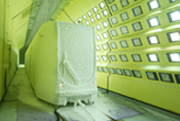
Comfort, and in particular thermal comfort in rail vehicles is of major importance for enhancing the attractiveness of public transport. Thermal comfort is influenced by personal, spatial, and ventilation-related factors, which have a complex impact on people's thermal balance and thus control their individual perception of comfort. To ensure good thermal conditions in a rail vehicle under all climatic conditions, extensive studies in a climatic wind tunnel are required. The research, optimization, and development is usually carried out on one of the first production vehicles.
Different methods are used:
- Thermal comfort study with passenger occupancy simulation using temperature, flow and relative humidity measurements in accordance with relevant standards EN 13129, EN 14750, EN 14813, UIC 553, VDV 181, VDV publication No. 236 (comfort measuring device)
- Fresh air volume measurement using the CO2 method (tracer gas measurement).
The particular advantage of this method for measuring air quality is that it allows for the evaluation of the influence of the airstream on the fresh air volume flow. For this purpose, comparative measurements are performed while stationary and at simulated maximum speed. - Thermography to detect irregularities and cold bridges
This allows a qualitative assessment of the thermal insulation of the car body construction and the analysis of the surface temperature distribution (e.g. temperature of the window frame). - Flow visualization using smoke (PIV PArticle Image Velocimetry)
Functional testing for performance, reliability and safety
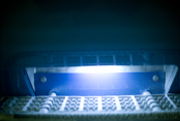
Almost all individual components can be subjected to special functional tests under harsh climatic conditions, either according to CEN/TR 16251 or according to individual customer requirements. This allows the reliability of the rail vehicle as a whole to be examined in addition to technical and safety-relevant parameters.
- Extreme temperatures and humidity levels have a negative impact on mechanical, electrical, electronic and pneumatic components.
- Rain and wind simulations provide an indication of the presence of leaks in the vehicle body, notably at the connecting corridors, doors and windows.
- Windscreen wiper tests under snow and rain conditions.
- Wet snow has an impact on all mechanical components exposed to outside conditions (doors, steps, couplings, roof equipment, mechanical brake system etc).
- Ingress of dry snow into air intakes, gaskets and engine compartment.
- Ice formation on mechanical components (pantograph, circuit breakers, doors, steps, couplings etc.).
- Alternating climate tests (tunnel entrances and exits)
Energy efficiency
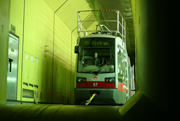
As railway operators' awareness of energy consumption increases, energy efficiency studies of auxiliary systems are becoming increasingly important. The air conditioning system (heating, ventilation, and cooling) is the second largest energy consumer after traction in a rail vehicle. Therefore, it is particularly important to understand its energy consumption depending on different external climatic conditions and operating modes. RTA has developed a standard test program for this purpose, which enables this status assessment of air conditioning energy requirements and provides the basis for optimizing or verifying energy-saving measures.
The simulation of daily profiles also provides insight into the performance of the air conditioning system under typical, realistic operating conditions. This analysis can be used to develop optimization measures to reduce energy consumption, the effects of which can be immediately simulated and verified in the model.
In collaboration with ADSE Consulting & Engineering, RTA offers a combination of climate tests and energy efficiency analyses. Combined with meteorological information about the climate at the future site of installation, the annual energy consumption of the air conditioning system can be calculated. This consumption has a significant impact on the LCC (life cycle costs), which are monitored closely by both manufacturers and operators.
Aerodynamic tests
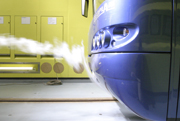
Aerodynamic measurements are carried out on components such as pantographs and windshield wipers. The effect of the air conditioning unit (fresh air intake, condenser exhaust air) and other parameters can be investigated through measurements on vehicle models.