


Research and Development
"Stagnation means regression." This citation by Rudolf von Bennigsen-Foerder is also accurate for scientific issues as well as for technical development. As International competence centre for climatic tests on rail vehicles RTA actively contributes to different F&E projects.
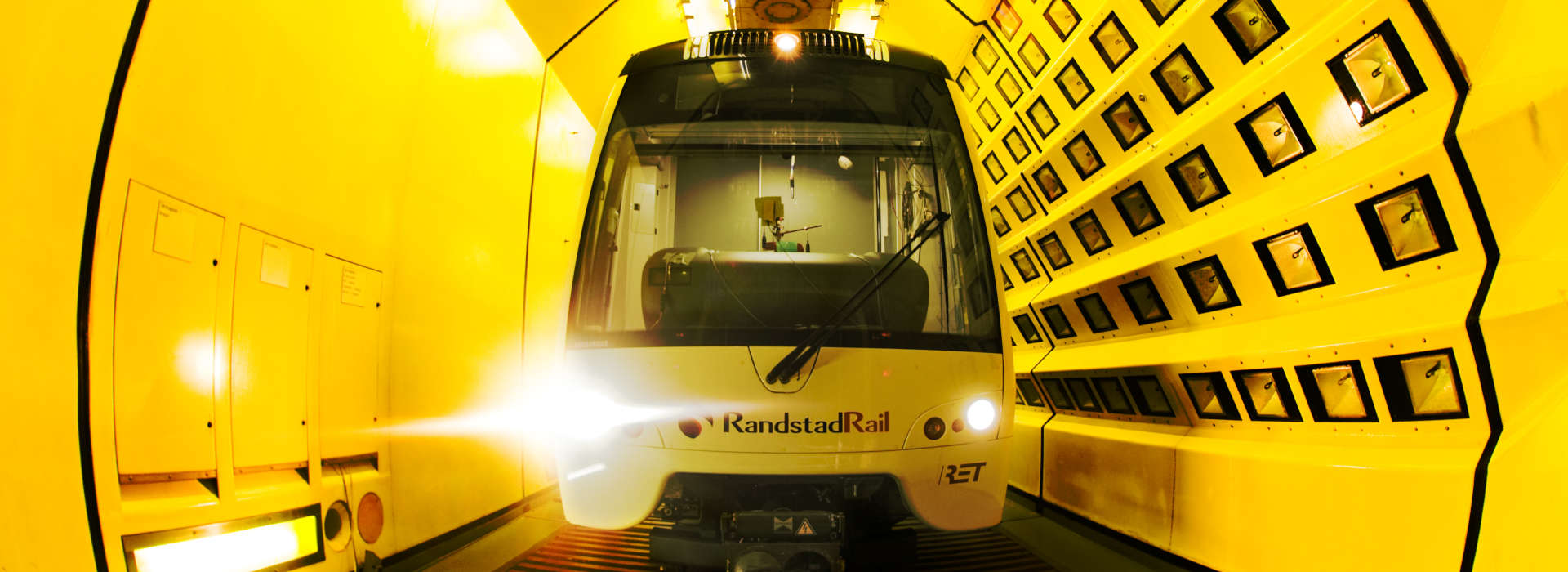
Range of services
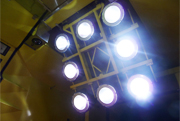
The Vienna Climatic Wind Tunnel operated by Rail Tec Arsenal provides the opportunity to investigate the impact of weather on vehicles and components under realistic operating conditions. Any weather conditions can be produced at the push of a button - from intense solar radiation through to snow, rain and ice. The combination with wind, load and drive cycle simulations allows the implementation of realistic test scenarios.
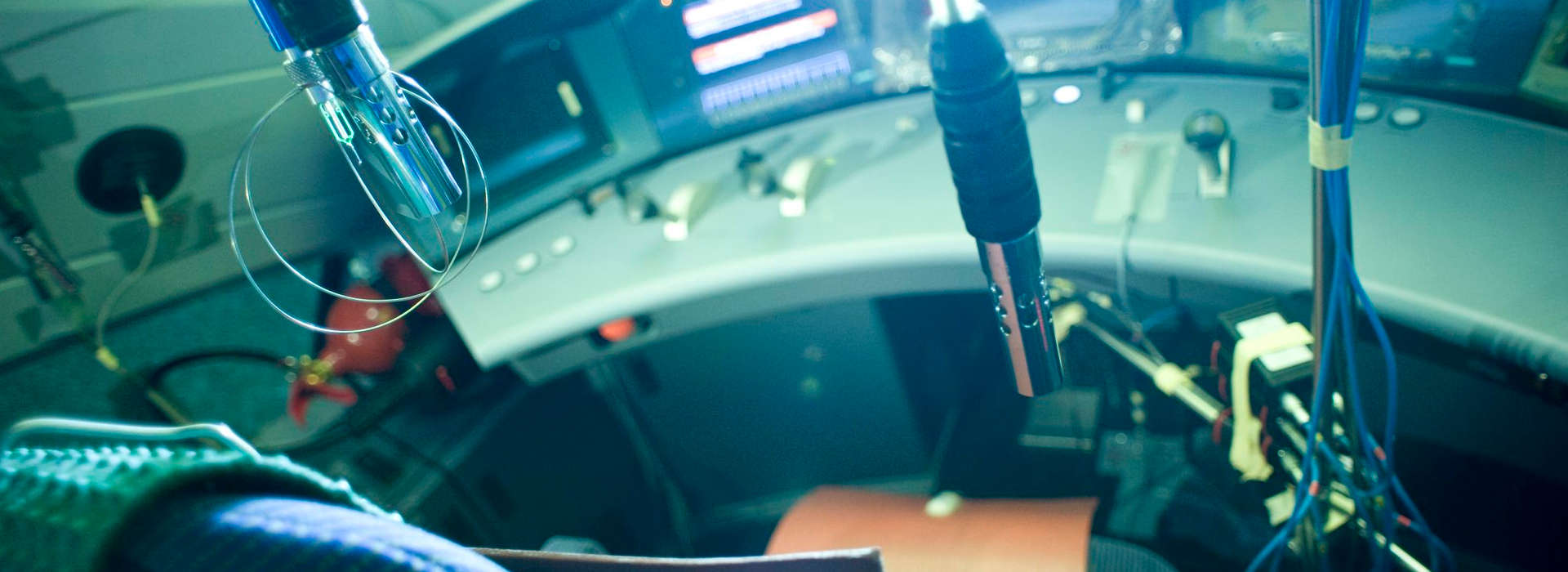
Thermal comfort in public transport
In order to boost the competitiveness of public transport the thermal comfort for passengers gains center stage of performed tests. Thermal comfort is achieved when passengers perceive the air temperature, humidity, air movement, and heat radiation of their surroundings as ideal and would not prefer warmer or colder air or a different humidity level.
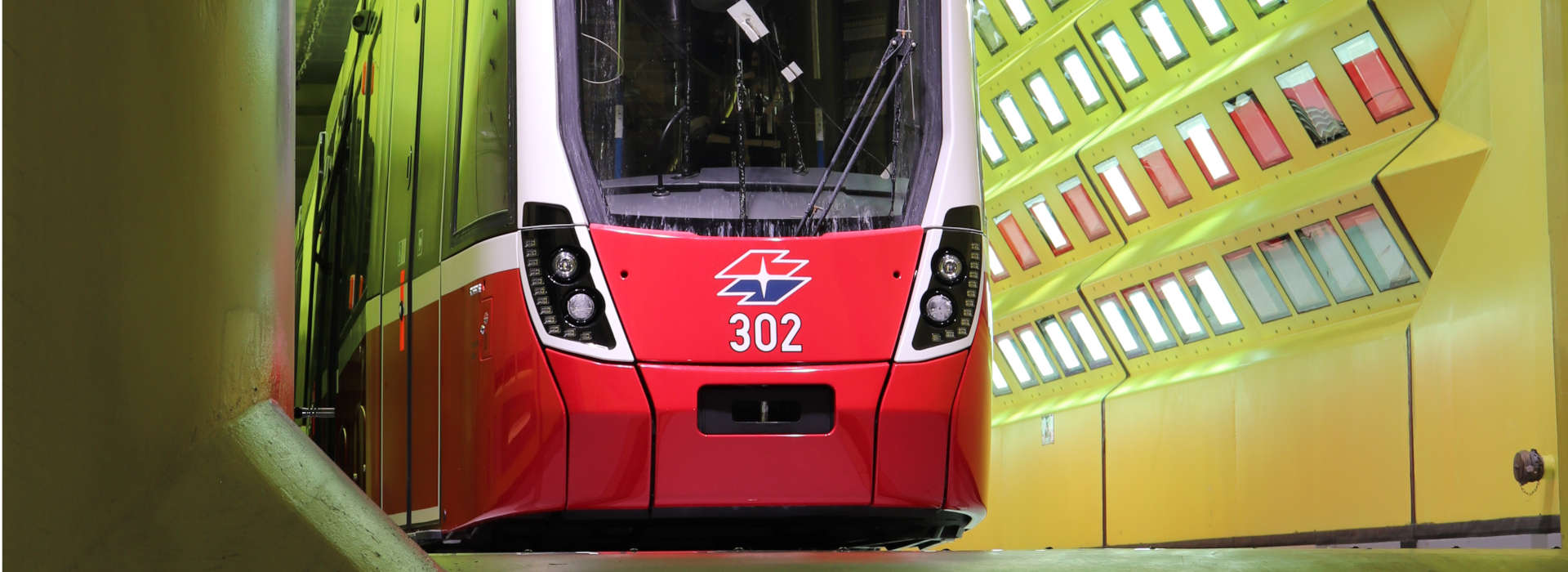
Special orientation towards rail vehicles
Climatic tests help to and optimise improve thermal comfort, safety, availability and energyefficiency. RTA offers the simulation of realistic operating conditions incl. extreme climatic conditions to perform a variety of tests. The operated facility is specially designed for rail vehicles.
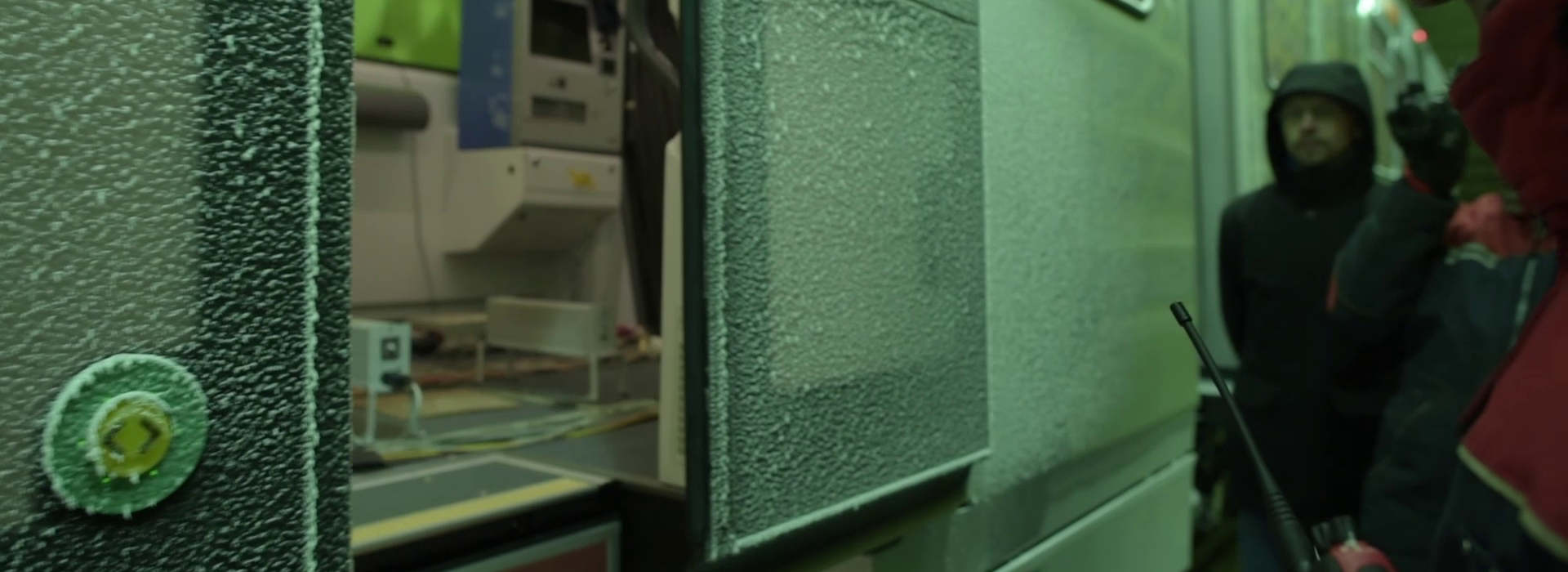
Functional tests
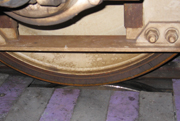
Functional tests of cirital components improve the safety of rail vehicles. If the functioning is guaranteed even under extreme weather conditions the reliability and availability both benefit from that. Passengers profit from punctuality whereas the operating company can reduce its maintenance expenses.
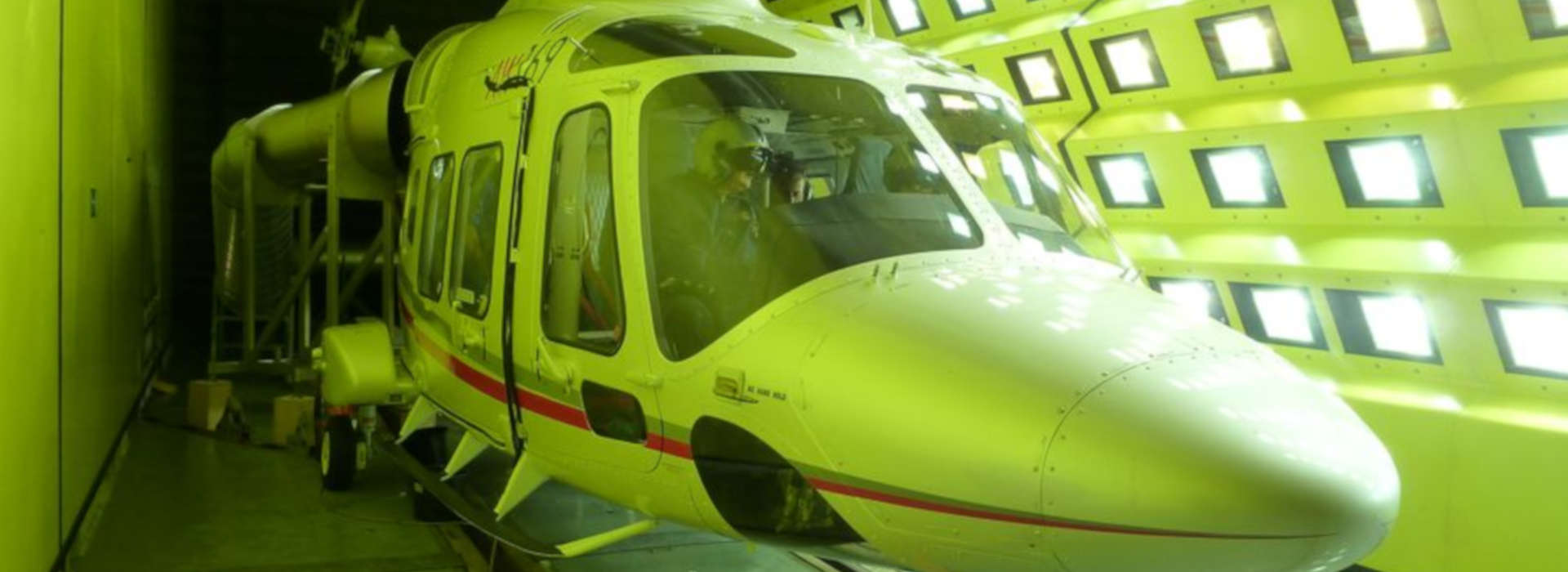
Climatic and Icing test for aviation
In the recent years RTA enlarged its compentence in the field of aviation. Envolved in various R&D projects a woldwide unique testing facility has been developed, usabe for e.g. realistic flight tests through icing clouds on the ground.

How energyefficient is a vehicle?
Right after traction the air conditioning system is the second highest energy consumer of a rail vehicle. Heating in winter and cooling in summer need to provide utmost thermal comfort for passengers. RTA developed a standard test cycle in the climatic wind tunnel to investigate the energyefficiency.

Company positioning
"Quality in any weather." The Climatic Wind Tunnel Vienna is one of the leading testing institutes in the area of climatic tests for rail vehicles due to its decades of know how and the unique facility. Apart from qualitative test performance, an up to date equipment, know how transfer with other experts and development of new testing possibilities are a matter of course at RTA.

Cloud simulation in the Icing Wind Tunnel
Thanks to this mobile icing rig, the longest climatic wind tunnel in the world can now be converted into the world’s largest icing wind tunnel for aircraft. This enables customer specific tests as well as certification tests for flying through clouds.

Why perfoming climatic tests?
Modern road and rail vehicles must meet high demands in terms of safety, reliability and availability as also thermal comfort and environmental friendliness. Proper functioning under extreme climatic conditions plays a key role in this context. Tests in the climatic wind tunnel are therefore of major importance for preventive quality assurance in vehicle development and modification.
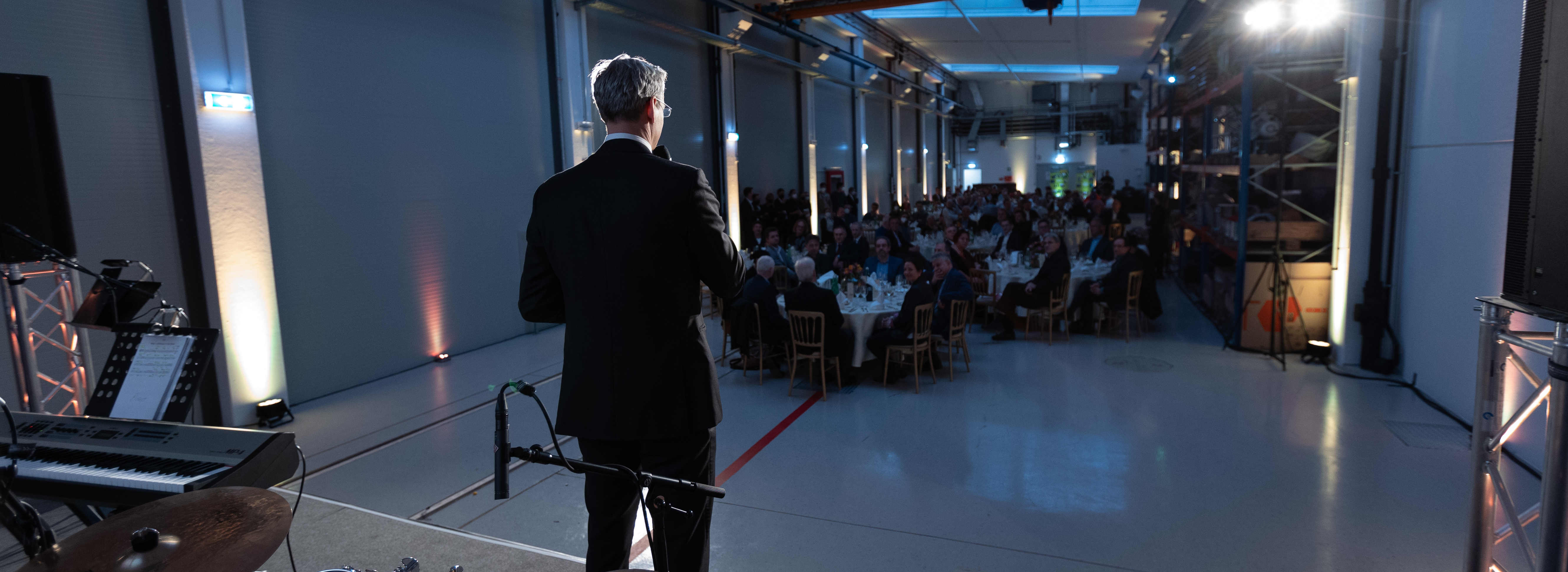
Opening Event for building extension
In addition to ongoing operations, a third preparation hall was added between September 2020 and December 2021, the office space was expanded, and the control room was modernized. The official opening took place on 24.3.2022.

Road vehicles in the Climatic Wind Tunnel
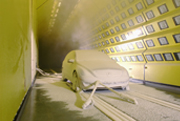
With a roller rig for road vehicles the small climatic wind tunnel also fits for special road industry tests. Climatic comfort inside the vehicle can be invstigated and tests on critical components help to improve the functionality under extreme climatic conditions.
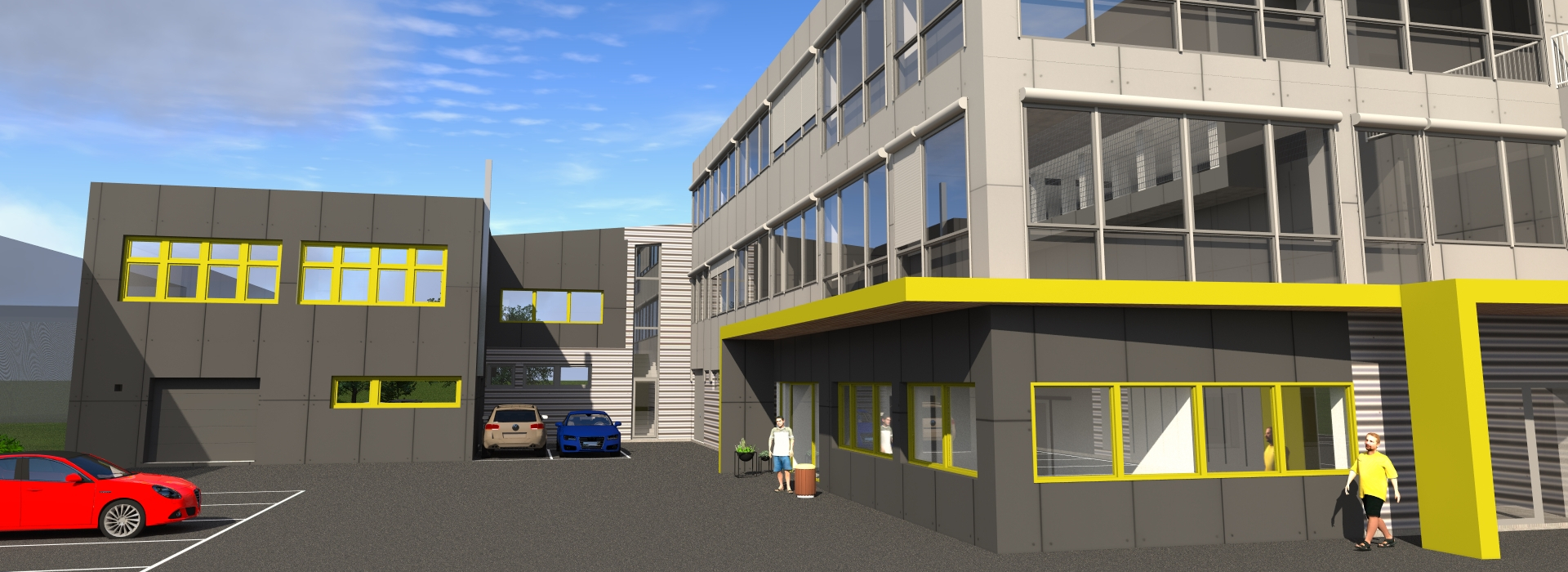
Preparation Hall No. III - ready for take off
Between September 2020 and Dezember 2021 RTA had been under contruction. Due to increased space requirements a third preparation hall had been added next to the existing building. Moreover office space was added and a modernisation of the entrance and control room area took place - Ready to "take off"!
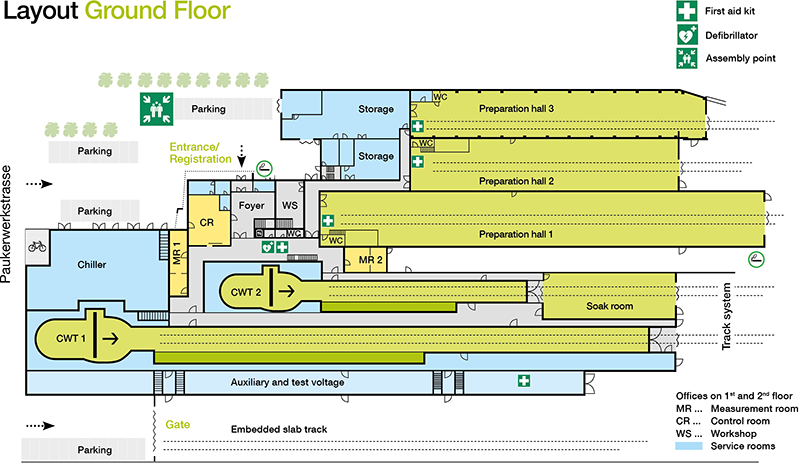

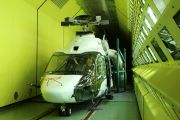 This is particularly significant because the formation of ice has a substantial influence on the performance of the engine and therefore realistic conclusions can only be drawn with an engine in operation. Without the contraction nozzle, the icing cross-section can even be extended to 16 m² at reduced ‘flight’ speeds. This enables icing tests to be carried out on whole helicopters, making the Vienna IWT the biggest of its kind in the world.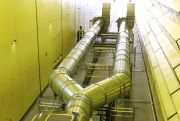
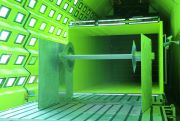
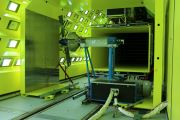 A propeller-rotor test rig (see picture on the left) supports the development and certification of de-icing systems on rotors, propellers or pushers under defined icing conditions. All existing and future development is based on specific customer requests.
 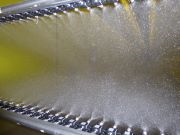 Safety is naturally a top priority in the aviation industry. When an aircraft flies through the upper cloud layers, super-cooled water droplets suddenly freeze and in just a few minutes form a centimetre thick layer of ice on critical components such as the engines, rotors, wings and sensors. In order to obtain certification for these components and the aircraft as a whole, manufacturers must demonstrate that sufficient protective measures have been implemented against icing and that the formation of ice will not endanger flight safety in any way.
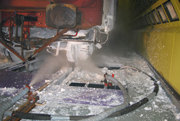
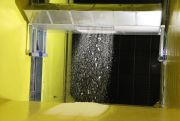 Ongoing research projects as e.g. in the field of natural like snow production
 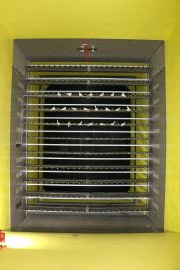 Certification tests involve a simulation of different cloud types from cumulus- and stratus clouds to freezing drizzle and freezing rain conditions at temperatures between -2°C and -30°C. The challenges is to ensure the correct ratio of drops in the right size in the air and water droplets remaining liquid at sub-zero temperatures. This ‘cloud formation at sea level’ is achieved using elaborate water treatment, complex air pressure and system control. The mobile icing rig consists of 11 bars and a total of 264 nozzles in different type configuration which is introduced into the large or small climatic wind tunnel for the icing tests. This arrangement enables icing tests to be carried out at speed up to 80 m/s (300 kph) in a cross-section of 8.75 m². Regular calibrations according SAE ARP5905 and EN 17025 using high tech measurement equipment guaranty highest cloud simulation quality.